
A waterproof Bluetooth speaker is one of those purchases that feels unnecessary right up until someone puts on a sad phone playlist at a cookout. Then suddenly, it is the hero of the patio, the campsite, the shower, and the questionable floating cooler situation. This waterproof bluetooth speaker review cuts through the spec-sheet soup to find the speakers that can take splashes, drops, and the occasional full-on beverage betrayal.
As an Amazon Associate I earn from qualifying purchases. This post contains affiliate links, so The Funny Beaver may earn a commission if you buy through them, at no extra cost to you.
The short version: buy for the way you actually hang out. A tiny clip-on speaker is great for a solo hike but will get absolutely cooked by a noisy pool party. A bigger speaker brings the bass, but nobody wants to carry a bowling ball to the beach. Here are six picks that earn their spot in the summer-fun draft.
Waterproof Bluetooth Speaker Review: The Top Picks
1. JBL Flip 6 – Best all-around pick

The JBL Flip 6 is the speaker for people who want one answer and would prefer not to spend three business days comparing drivers. It is compact enough to toss in a backpack, loud enough for a deck hang, and rated IP67 for dust and water resistance. In normal-human language, it can handle sand, rain, splashes, and a brief accidental dunk without demanding a Viking funeral.
Its sound leans energetic, with clear vocals and enough bass to keep pop, hip-hop, and rock from sounding thin. It will not shake the foundation like a huge party speaker, but that is not its job. The Flip 6 is built for the person who wants good sound everywhere without hauling around a power station.
The trade-off is simple: at top volume, bass can lose some depth, especially outdoors. Still, for travel, tailgates, kitchen duty, and pool days, this is the easiest recommendation on the list.
2. JBL Charge 5 – Best for bigger sound and battery

If the Flip 6 is the reliable friend who always brings snacks, the JBL Charge 5 is the friend who arrives with a cooler, extra chairs, and a playlist that somehow works for everyone. It is bigger, louder, and bassier, with an IP67 rating and a battery designed to keep the party moving long after somebody says, “Just one more song.”
The Charge 5 makes the most sense for groups. It has enough low-end muscle for backyard gatherings and beach setups where smaller speakers start sounding like a mosquito trapped in a jar. It can also charge a phone through its USB output, which is very handy when the group chat is draining everyone’s battery at once.
The downside is portability. It is still easy enough to carry, but it is not the speaker you clip to a belt loop and forget about. If you want serious sound without stepping into giant party-speaker territory, though, it is worth every cent.
3. Soundcore Motion Boom – Best value for outdoor bass

The Soundcore Motion Boom is for bargain hunters who refuse to accept sad, tinny sound as their fate. It is larger than the Flip 6 and has a built-in handle, so it is clearly meant for the outside world: campsites, bonfires, garages, parks, and patios where someone is grilling like they are auditioning for a reality show.
Its IPX7 water-resistance rating means it is built to survive water immersion, though it does not carry the same dust rating as IP67 options. That matters if your adventures involve fine sand, dusty trails, or kids who treat a speaker like an archaeology project.
What it does deliver is punchy bass and a lot of volume for the money. The companion app lets you adjust EQ settings, which is useful because everyone hears bass differently. Some want a balanced sound. Some want their lawn chairs to experience the kick drum personally.
4. Bose SoundLink Flex – Best for clean sound in a small package
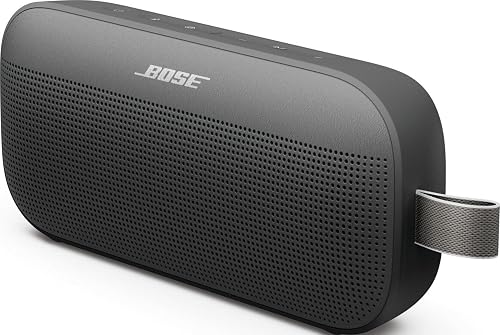
The Bose SoundLink Flex is a strong choice for listeners who care more about clean, detailed audio than chest-thumping bass. It is compact, well-built, and rated IP67, making it a natural fit for pool bags, bathroom shelves, kayak trips, or the kitchen counter during a chaotic Sunday cleaning session.
Bose does a particularly nice job with vocals, acoustic music, podcasts, and mellow playlists. It sounds polished at moderate volume, with a warm character that feels more expensive than its size suggests. It also has a clever orientation feature that adjusts sound based on how the speaker is positioned.
This is not the best pick for a loud crowd. It gets plenty loud for personal listening and small groups, but if you are trying to power a full backyard party, grab the Charge 5 or Motion Boom instead. The Flex is the move when you want a portable speaker that sounds less like a gadget and more like actual music.
5. Ultimate Ears Wonderboom 4 – Best for poolside chaos

The UE Wonderboom 4 is basically a cheerful little grenade of sound. Its round shape, float-friendly design, and IP67 rating make it almost absurdly suited to pool days. It is dustproof, waterproof, and designed to float, which is a feature you may laugh at until your speaker slips off an inflatable raft.
Despite its small size, it throws sound surprisingly well in every direction. That 360-degree approach is useful when people are moving around a picnic table or sitting in a loose circle around a fire pit. It will not deliver the deepest bass, but it makes up for that with fun, clear, room-filling sound.
This is a great gift speaker, too. It is simple, durable, and not intimidating for someone who just wants to connect their phone and play music. No menus, no nonsense, no need for a degree in Bluetoothology.
6. JBL Clip 5 – Best tiny speaker for hikes and travel

The JBL Clip 5 is proof that a speaker does not have to be large to be useful. Its built-in carabiner clips onto a backpack, bike bag, or belt loop, and its IP67 rating means unexpected weather is not a deal-breaker. It is the ideal travel companion for solo hikers, hotel rooms, showers, and camp setups where every ounce of packing space matters.
Set expectations correctly: this is not party gear. The Clip 5 is made for personal listening and close-range sound, not for overpowering waves, wind, or a group of friends yelling over cornhole. Within that lane, it is a genuinely fun little speaker with more volume and fullness than its size suggests.
It is also the least painful option if you tend to lose things. A smaller price and easy clip-on design make it less terrifying to bring everywhere. Just do not expect it to replace a larger speaker when the whole crew shows up.
What Waterproof Actually Means
Waterproof ratings are not just nerd-code printed on a box. They tell you how much chaos a speaker can survive. An IP67 rating is the sweet spot for most people because the first number means it is protected from dust, while the second means it can handle temporary immersion in water. That covers beaches, pool decks, rainy patios, and the classic “my drink had nowhere else to go” accident.
IPX7 means the speaker can handle immersion but has not been officially rated for dust resistance. That is still excellent for pool use, shower listening, and rainy days. It is just less reassuring if sand and trail dust are part of your regular plans.
One reality check: water resistance is not invincibility. Saltwater, soap, extreme heat, and damaged charging ports can cause trouble. After a beach day, rinse off salt residue with fresh water if the manufacturer allows it, dry the speaker, and do not charge it until the port is fully dry. Your speaker may be tough, but it is not a marine biologist.
How to Pick the Right One Without Overthinking It
Start with where the speaker will live. For backpacks, showers, and solo adventures, go small with the JBL Clip 5 or Wonderboom 4. For a balanced everyday speaker that can handle almost anything, the JBL Flip 6 is the no-regrets choice. For cookouts, camping groups, and outdoor hangs where bass matters, step up to the JBL Charge 5 or Soundcore Motion Boom.
Battery claims also deserve a little skepticism. Manufacturer estimates usually assume moderate volume, not maximum volume while your friend keeps replaying the same song. Bigger speakers generally last longer, but volume, bass level, Bluetooth connection quality, and phone charging can all chip away at runtime.
Finally, do not pay for a giant speaker if you only listen in the shower, and do not buy a palm-size speaker if your mission is to soundtrack a beach volleyball tournament. Match the speaker to the chaos level. The best one is the model you will actually bring along when the weather is good and the playlist is even better.
Upgrading the sound at home too? Our soundbar vs TV speakers guide explains when a soundbar is worth it.